Flood Risk in Burlington: What Home Buyers Should Know Before Buying
What Home Buyers Should Know About Stormwater, Creeks, and Past Flood Events
Severe rainfall events over the past decade have made stormwater management an important consideration for home buyers in Burlington.
Most homes in the city do not experience flooding. However, some neighbourhoods have been affected during unusually intense storms, particularly in areas connected to creek corridors and older stormwater infrastructure.
Understanding how water moves through Burlington and what protection systems exist at both the municipal and property level can help buyers evaluate homes more confidently.
Major Flood Events in Burlington
August 2014 Storm
One of the most significant flooding events in Burlington’s history occurred on August 4, 2014.
During that storm, parts of the city received close to 190 mm of rainfall within a few hours, overwhelming stormwater systems and causing widespread basement flooding across multiple neighbourhoods.
Following the event, the City of Burlington and Halton Region introduced several mitigation initiatives, including stormwater infrastructure improvements, homeowner protection programs, and additional drainage studies.
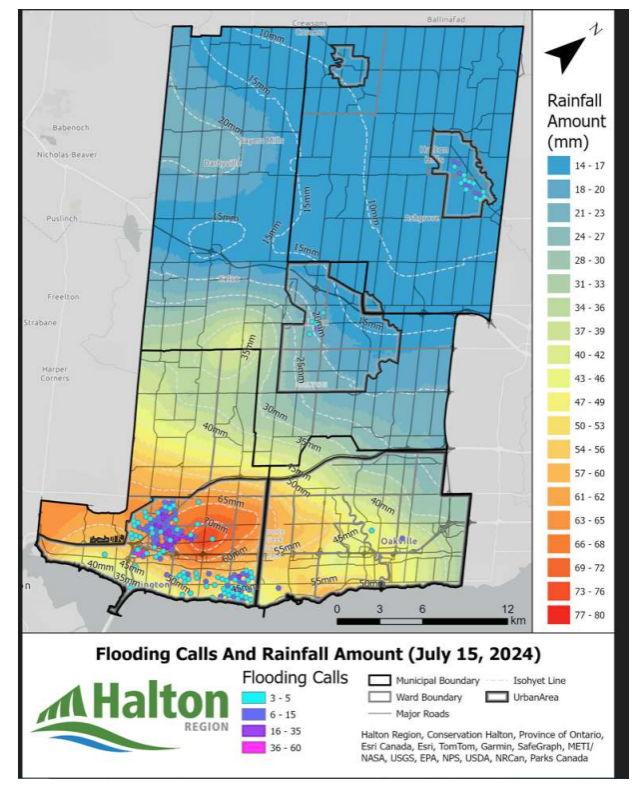
July 15–16, 2024 Storm
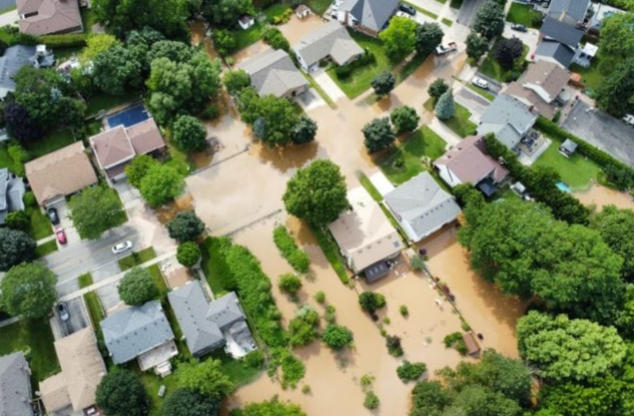
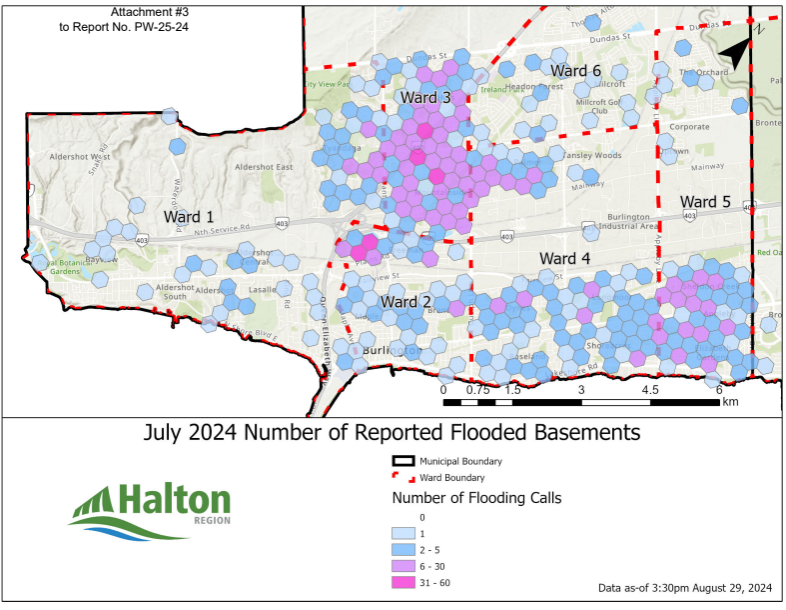
Another significant rainfall event occurred on July 15 and 16, 2024. Several Burlington neighbourhoods again experienced flooding, prompting community meetings and further review of stormwater performance.
Residents raised concerns related to sump pump failures, sewer backup issues, and the capacity of stormwater systems during extreme rainfall.
Municipal officials acknowledged that rainfall intensity during recent storms exceeded the conditions many older systems were originally designed to handle.
How Water Moves Through Burlington
Burlington contains a network of creeks, ravines, and drainage corridors that carry stormwater toward Lake Ontario.
These natural drainage systems play a critical role during heavy rainfall. Water levels in these channels can rise quickly as they collect runoff from surrounding neighbourhoods.
Homes located near creeks or ravines are not automatically at risk of flooding. However, understanding nearby drainage routes can provide useful context when evaluating properties.
Creek maintenance, debris removal, and monitoring of water flow are ongoing parts of the city’s stormwater management process.
Stormwater Infrastructure and Sewer Systems
Municipal stormwater systems are designed to manage typical rainfall events. During extremely intense storms, rainfall volumes can exceed system capacity.
When this happens, large amounts of water may enter sanitary sewer systems, particularly if surface drainage or downspouts feed into those pipes. If the system becomes overloaded, water can back up through basement plumbing fixtures or floor drains.
Homes with lower basement elevations are generally more vulnerable in these situations.
Many Burlington neighbourhoods were developed decades ago, and engineering standards used at the time did not anticipate the scale of rainfall events seen in recent years.
Flood Protection Systems for Homes
Several protection systems can significantly reduce the risk of basement flooding during extreme weather events.
Buyers evaluating a property may wish to confirm whether the home includes:
sump pumps
backwater valves
properly disconnected downspouts
functioning weeping tile drainage systems
backup power for sump pumps
backup generators for critical systems
Following the 2014 floods, Halton Region introduced programs to help homeowners install sump pumps and backwater valves. Many homes that experienced flooding received these systems through municipal programs.
Grant programs may still be available to assist homeowners with installing backwater valves or other protective upgrades.
When purchasing an older home, buyers may wish to confirm whether these systems have been installed and are functioning properly.
Downspout and Drainage Management
One initiative introduced after the 2014 floods was encouraging homeowners to disconnect downspouts from sanitary sewer systems.
Redirecting downspouts toward lawns or permeable areas helps reduce the amount of rainwater entering sewer infrastructure during heavy storms. Reducing this load can help lower the risk of sewer backups during extreme rainfall.
Proper property grading and drainage around the home can also influence how water moves during major storms.
Additional Factors That Can Influence Flooding
Flooding during extreme rainfall events is typically caused by a combination of factors rather than a single issue.
Power outages during storms can disable sump pumps, removing a key line of defense against basement flooding.
Drainage between neighbouring properties can also affect how water moves across a street or block during heavy rainfall. Landscaping changes, grading adjustments, and backyard drainage systems may influence how water flows between homes.
Tree roots and debris can also impact underground pipes or drainage systems over time.
Age of Housing and Infrastructure
Some Burlington neighbourhoods contain homes built before modern stormwater engineering standards were implemented.
Drainage design and building codes from earlier decades were not developed with today’s rainfall patterns in mind. As a result, older areas may rely more heavily on property level protection systems and ongoing infrastructure upgrades.
This does not mean older homes are unsafe, but it highlights the importance of understanding how drainage systems function around the property.
Floodplain Mapping Tools
Public mapping tools can provide additional context when evaluating flood risk.
Conservation Halton maintains a floodplain and wetland hazard mapping system that allows users to view regulated floodplain areas and drainage corridors across the region.
These maps do not necessarily indicate that a property will flood, but they can help buyers understand how nearby creeks, wetlands, and drainage systems interact with surrounding neighbourhoods.
What Burlington Home Buyers Should Consider
Flood history does not automatically mean a property will flood again in the future. However, it can highlight areas where additional due diligence may be helpful.
When evaluating a home in Burlington, buyers may wish to consider questions such as:
Has the property experienced flooding during past storms?
Does the home have a functioning sump pump and backwater valve?
Have flood mitigation upgrades been installed?
How does stormwater move through the surrounding neighbourhood?
Are nearby creeks or ravines part of the drainage system?
Understanding these factors can help buyers better evaluate how a property interacts with its surrounding environment.
Final Thoughts
Stormwater management involves a combination of natural drainage systems, municipal infrastructure, and property level protection measures.
Burlington has made significant investments in flood mitigation since the major 2014 storm, and further analysis continues following the 2024 event.
For home buyers, the most important step is simply awareness. Understanding how water moves through a neighbourhood and confirming that a property has appropriate protection systems in place allows buyers to evaluate homes more confidently and make informed decisions.